

“It is exercise alone that supports the spirits and keeps the mind in vigor.”
Marcus Tullius Cicero (106 BC–43 BC)

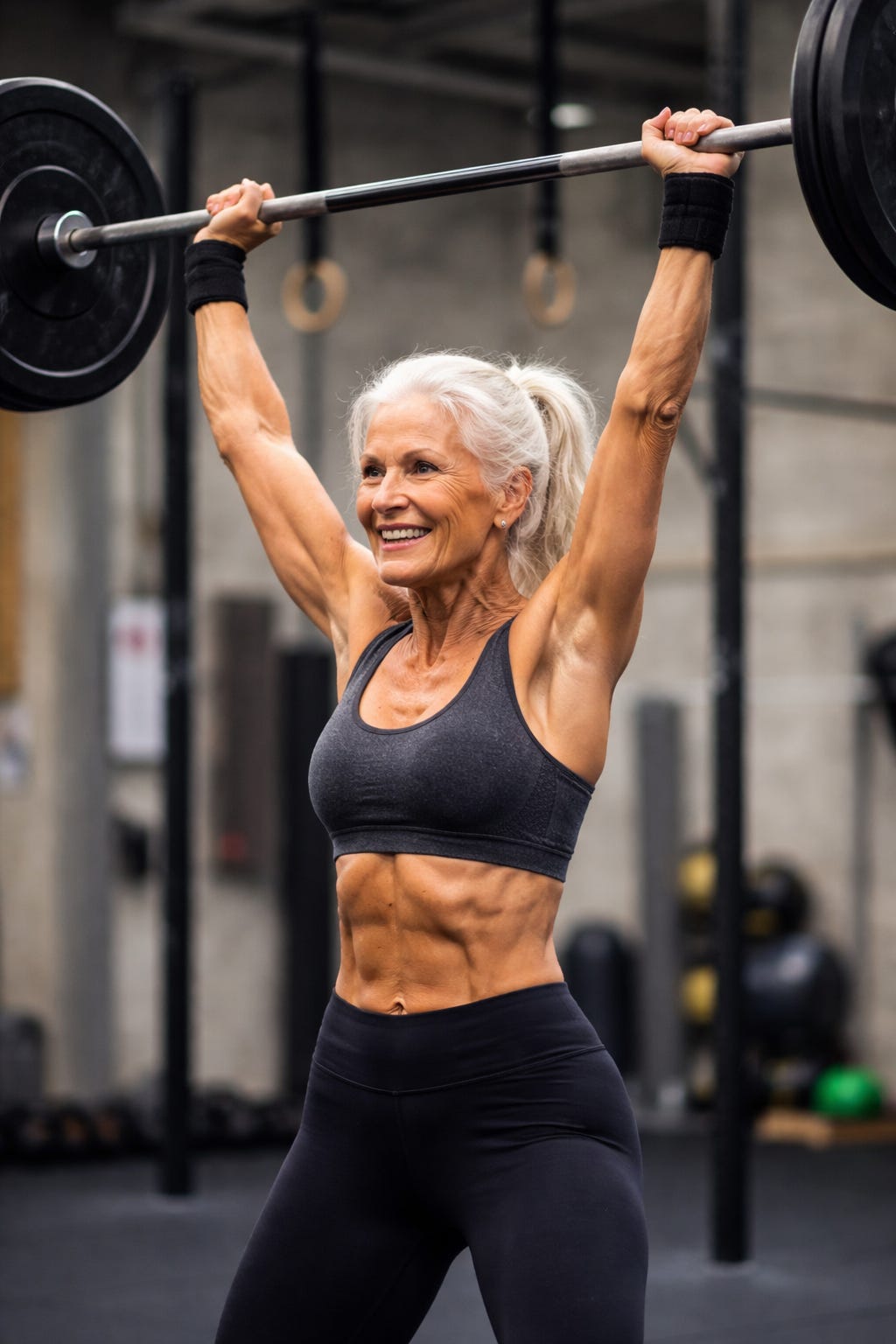
Where across the course of your day today, could you consider where it might be that you stop training like you’re trying to prove something, and start training like you’re trying to preserve something?
In your twenties, exercise is often about intensity.
In your thirties, it becomes about identity.
Beyond forty-five, it should become about longevity.
Here’s the thing: The goal is no longer to win the workout; it’s to win the decade.
There are certain movements that give you more than they take.
Walking with intent, walking while carrying a load.
Moving your body through water.
Climbing, stepping, striking, and sustaining your breath.
These are not just exercises; they are rehearsals for life.
Strength is one of those words that gets used constantly but is rarely defined properly.
Strength is the ability to produce force against resistance.
That’s the physical definition, but that’s only one layer.
The 3 levels of strength are:
1. Physical Strength - The ability to: lift, push, pull, carry and stabilise
It’s measurable:
How much you can lift.
How long you can sustain effort.
How well you control your body
Past 45, this becomes less about ego and more about joint integrity, muscle retention and functional capability
2. Mental Strength - The ability to: stay composed under pressure, delay gratification and continue when it’s uncomfortable.
This is your capacity to:
Hold the line.
Stay disciplined.
Act despite resistance.
3. Emotional Strength - The ability to: regulate your reactions, sit with discomfort and respond rather than react.
It’s not about suppressing emotion; it’s about not being controlled by it.
Most people think strength is intensity, aggression and power, but real strength is control.
Control of your body, control of your thoughts and control of your responses.
Strength is the capacity to hold your position when pressure is applied.

In practical terms, strength shows up as getting up off the floor with ease, carrying your body through life without hesitation, not snapping under pressure and not quitting when things get uncomfortable.
I used to say that the payoff from exercise is vanity.
Nowadays, I say the payoff from exercise is sanity.
Strength is not how much you can lift on your best day; it’s how well you can hold yourself together on your worst one.
Ageing isn’t losing your health all at once; you lose it in increments.
A little less movement, a little more stiffness, a little less strength, a little more hesitation, until one day, what used to be easy… isn’t.
The solution is rarely complicated; move your body daily, lift something with purpose, breathe with intent and recover like it matters.
Train in a way that allows you to come back tomorrow, because the greatest form of discipline is not intensity, it is continuity.
Not just in how you look, but in how you move.
Not just in how hard you train, but in how well you recover.
Not just in how much you can do, but in how long you can keep doing it.
The real measure of your training is not what you can do today; it’s what you are still able to do ten years from now.
While you’re thinking about that, think about this and have a Gr8 day!
Be well,
DL
“Strength does not come from physical capacity. It comes from an indomitable will.”
Mahatma Gandhi (1869–1948)
#GoRuck!